


Who Is the Garmin Edge MTB For?
Let’s make this crystal clear, because this device is not trying to be “for everyone.”
The Garmin Edge MTB is built with a very specific rider in mind — someone who treats mountain biking as a technical sport, not just a casual spin outside.
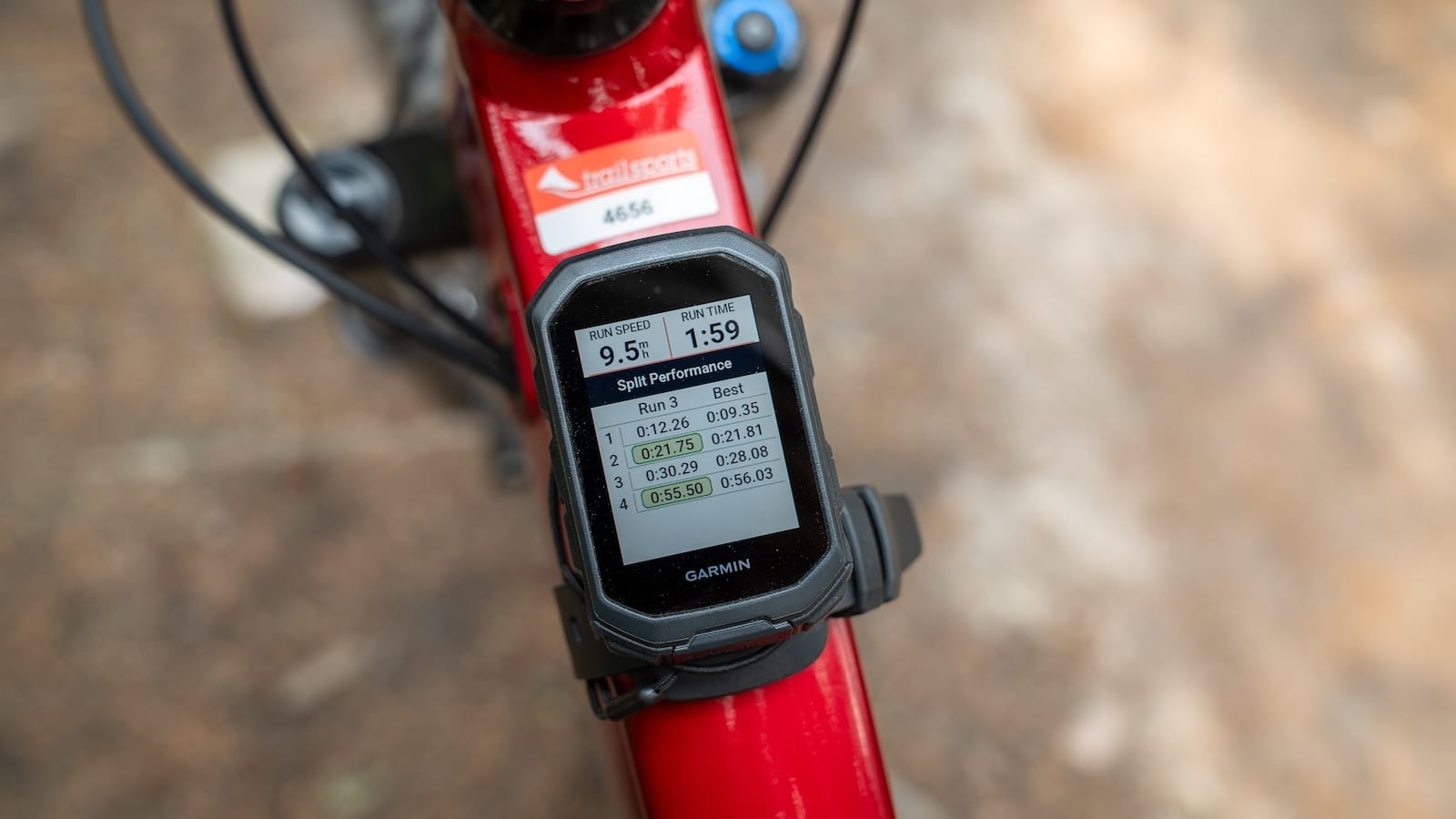
A Great Fit If You:
You ride trail, enduro, or light downhill and regularly deal with real terrain — rocks, roots, loose gravel, steep punchy climbs, and fast, technical descents. This unit shines when the ride gets complicated, not when the road is straight and predictable.
You spend serious time in forests, hills, and backcountry trail systems, where GPS accuracy matters more than ever. If you’ve ever looked at a ride map and thought, “That’s not the line I took,” you’ll appreciate what this device does differently.
You enjoy reviewing your ride afterward, not just for distance, but for how you actually rode. Looking at cornering lines, descent speed, and jump data isn’t overkill to you — it’s part of getting better and understanding your performance.
You care about performance metrics that make sense for MTB. Grit, Flow, jump tracking, high-frequency GPS logging — these are tools for riders who want insight into technique, efficiency, and trail handling, not just navigation from point A to B.
You like gear that’s built for rough use. Mud, rain, vibrations, and the occasional knock are part of your normal ride, and you need a computer that doesn’t feel fragile.
Not Ideal If You:
You mostly commute in the city or ride paved bike paths. In that environment, you simply won’t use most of what makes the Edge MTB special.
Your riding is mainly long road miles at steady effort. A road-focused computer will give you better value if your priority is pacing, cadence, heart rate zones, and training structure over terrain analysis.
You only want basic stats like speed, distance, and ride time. The Edge MTB can obviously show those — but buying it just for that is like getting a 4×4 off-road truck to drive to the grocery store.
In short, this is for riders who see mountain biking as technical, skill-based riding on unpredictable terrain. If that sounds like your world, the Edge MTB makes a lot of sense. If not, there are simpler — and cheaper — options that will serve you just fine.
Built for Dirt, Mud, and Impacts
7 Physical Buttons
The Edge MTB doesn’t depend fully on a touchscreen, and that’s a huge deal once you leave smooth pavement behind. Instead, it uses seven physical buttons placed so you can control the unit by feel, not just by sight.
Out on the trail, your hands are rarely in “clean, dry, office mode.” You’re often:
Wearing full-finger gloves
Dealing with mud, sweat, or dust
Riding through rain, mist, or cold conditions
In those moments, touchscreens can turn into a guessing game. Wet fingers, muddy gloves, or jolts from rough terrain can lead to missed swipes, wrong menus, or a screen that simply doesn’t respond when you need it most.
Physical buttons solve that. You get tactile feedback you can actually feel through your gloves, so you know a command went through without staring down at the device for seconds at a time. That means fewer distractions and more focus on the line ahead.
On bumpy descents especially, being able to press a solid button is far more reliable than trying to tap a small icon while your bars are shaking. It’s a simple design choice, but for real mountain bike riding, it makes the Edge MTB feel like a tool built for the environment — not a fragile gadget adapted from road use.
Tough Glass Display
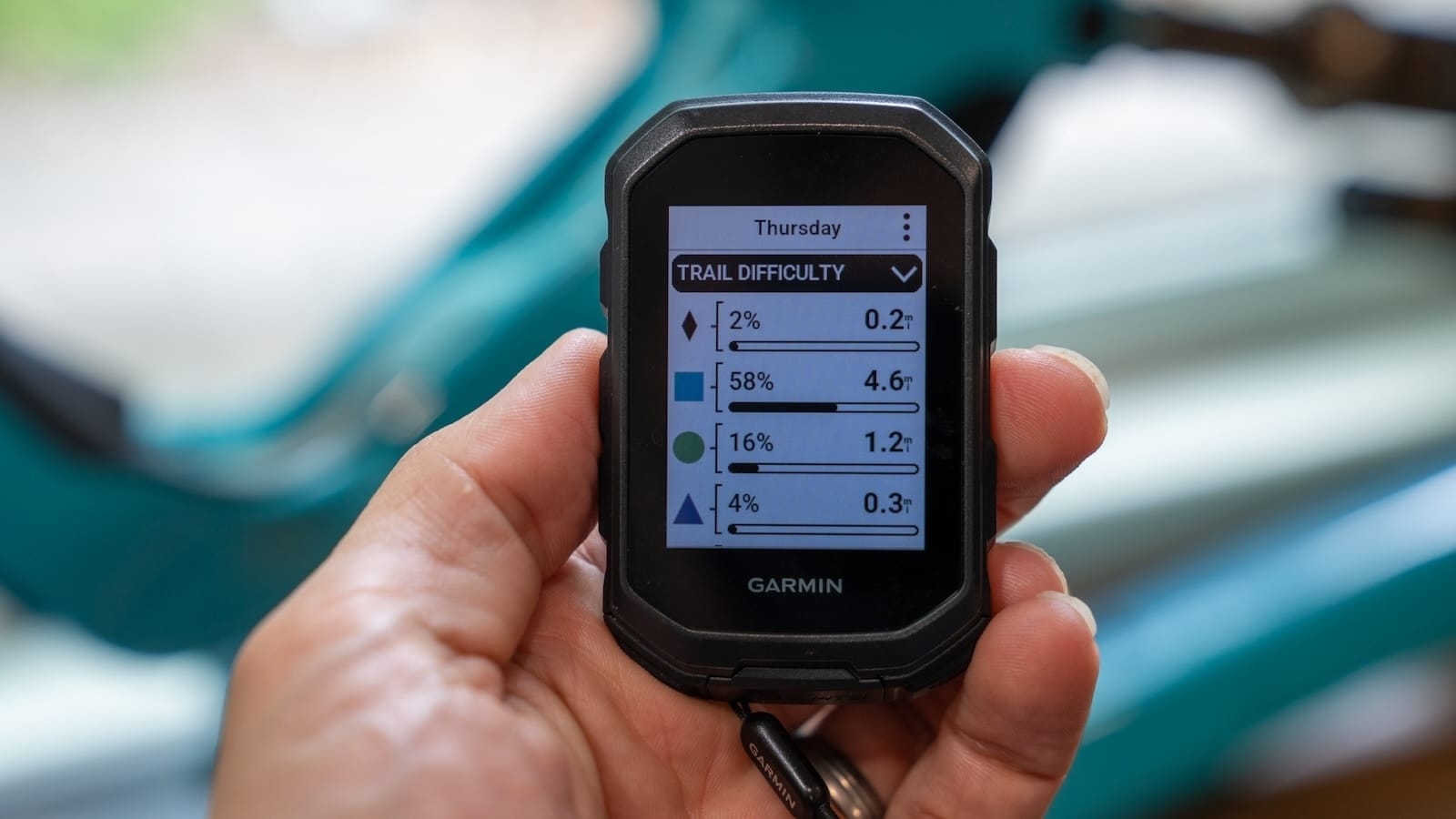
It uses durable glass (Gorilla Glass–style) designed to handle light impacts, trail debris, and the occasional branch swipe. On trails, stuff will hit your gear. This screen is made with that in mind.
High-Level GPS Accuracy Where It Matters
Multi-Band GPS
Dense forests and canyons can wreck weak GPS signals. Multi-band support helps the Edge MTB maintain a more stable connection, so your track doesn’t zigzag all over the map.
5 Hz GPS Recording — The MTB Sweet Spot
This is huge for mountain bikers.
The device records position multiple times per second. The result:
Cornering lines look accurate when you review the ride
Downhill sections reflect your real path
Technical analysis becomes way more precise
If you care about how you actually rode a section, not just that you were “somewhere on the trail,” this matters.
MTB-Specific Data — Not Just Generic Cycling
Jump Tracking
Yes, it tracks jumps. It logs:
Number of jumps
Air time
Distance
It’s not just cool — it’s useful for riders working on technique and progression.
Grit and Flow
Two standout MTB metrics:
Grit measures how tough the terrain is
Flow shows how smoothly you rode it
Perfect for comparing different runs on the same trail and seeing real improvement over time.
Full-Color Trail Maps
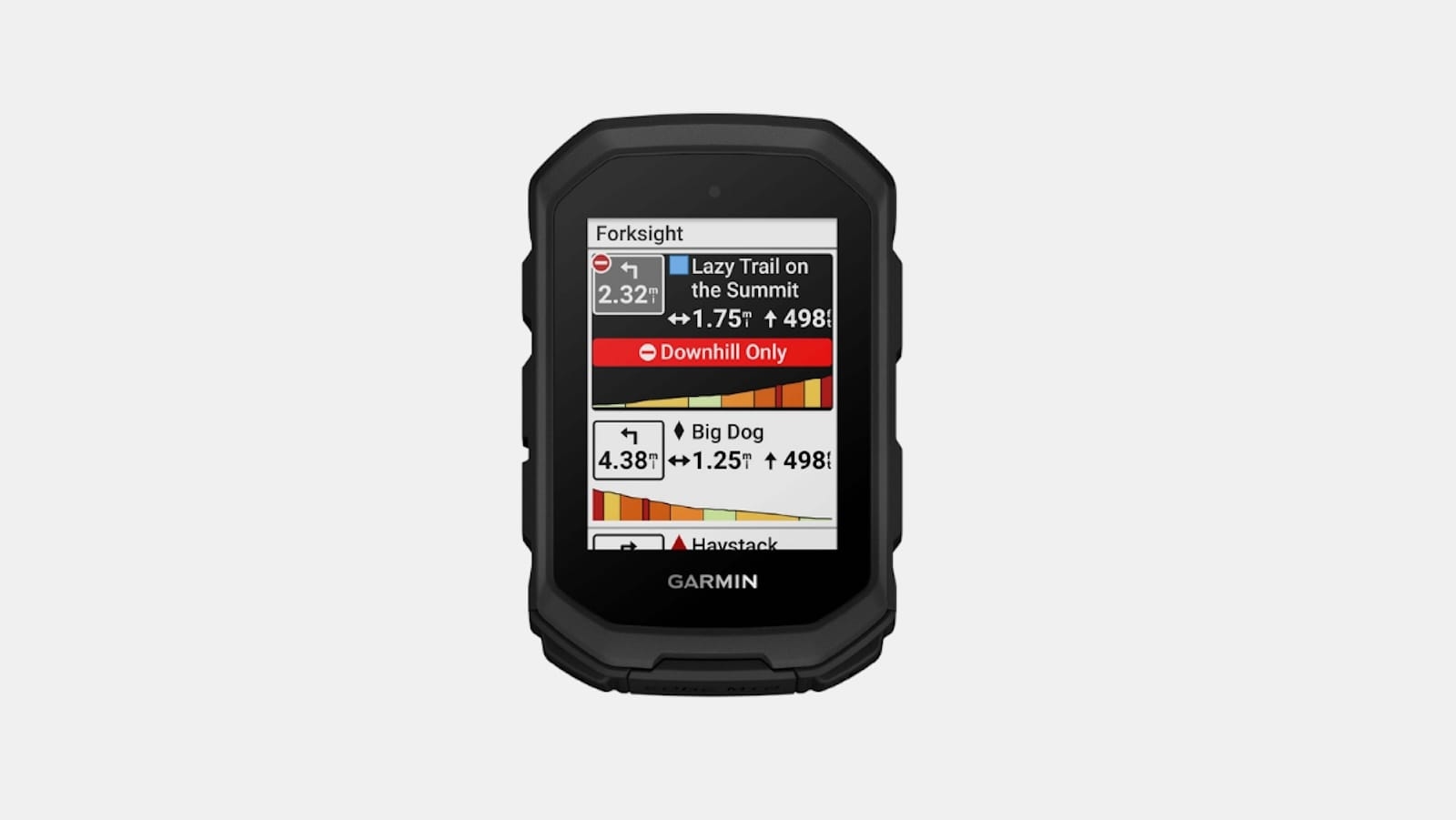
This isn’t just a thin line on a blank screen.
You get:
Trail intersections
Alternate lines
Trail networks
That’s a big deal when you’re in an unfamiliar system and don’t want to accidentally end up on a sketchy route you didn’t plan for.
Battery Life That Matches Long Rides
You’re looking at roughly:
Up to 14 hours in demanding use
Up to 26 hours in battery saver mode
Plenty for long trail days, races, or multi-hour backcountry sessions without constantly stressing about power.
What MTB Riders Commonly Say
Positive feedback:
Tracking detail is impressive when reviewing rides in the app
Extremely helpful for riders who analyze technique
Buttons are easier to use than touchscreens on rough trails
Common critiques:
Overkill for casual riders
Not cheap
Quick Comparison with Similar Bike Computers
| Model | Strength | Best For | Typical US Price |
| Garmin Edge MTB | MTB-specific data, 5 Hz GPS, jump tracking | Trail, enduro | ~$399 |
| Garmin Edge 540 | Strong battery, full training features | Road + mixed | ~$349 |
| Wahoo Elemnt Bolt v2 | Easy interface, solid syncing | Road, fitness | ~$279 |
| Hammerhead Karoo | Beautiful screen, powerful maps | Road, gravel | ~$399 |
The Edge MTB clearly stands out for technical terrain data.
Price in the U.S.
Typical pricing lands around:
About $399 USD, depending on sales and season.
Where to Buy (Trusted Options in the U.S.)
You’ll usually find it at:
Garmin’s official website
REI
Amazon (from authorized sellers)
Major local bike shops
Biggest Pros
Trail-ready, durable design
Extremely detailed tracking
Deep MTB-specific metrics
Solid battery life
Downsides
Price is high for casual riders
Too many features if you just ride easy miles
Straight-Up Verdict
If you’re serious about trail riding and like reviewing your lines, jumps, and performance, the Garmin Edge MTB feels like a device built specifically for you.
If you mostly ride city streets or casual cardio miles, though, this is like using a chef’s knife to spread butter. Powerful — but more than you really need.
Read original ppost on: //mentrending.com/garmin-edge-mtb-the-gps-bike-computer-built-for-trails-not-coffee-shop-rides/